Polyend publishes Tracker firmware code and a 1.0 update
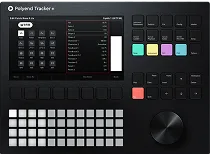
Polyend has opened the firmware of its whole Tracker line, and released a community update alongside it for all three models. The sampler-sequencer boxes can now be extended by their owners, not only by the company.
Community Edition 1.0 for all three devices
The release is called Tracker Community Edition 1.0 and sits on GitHub next to the code. It reaches the original Tracker, the Tracker+ and the Tracker Mini, the three standalone sampling workstations in the range.
Sample handling changes first. Stems, loops and field recordings no longer have to fit in memory: they stream from a microSD card, and only the opening of each streamed sample stays loaded.
The sequencer gains micro-move and volume fields, which hold the timing offset and velocity of a hit and leave both step FX slots free for other jobs. Chance conditions are new too: a step can now trigger a snare fill on every fourth pass through the pattern.
Polyend also wants outside developers to build for the platform. A development kit lets users make effects and generators, then share or sell them. Tracker+ and Tracker Mini get a second kit for writing synth engines, alongside two engines of their own, CHIP and DIRT.
Smaller items round out the release: wavetable envelopes and LFOs, quicker loading and saving of projects, tighter MIDI clock timing, plus a web-based editor where users can design their own themes and fonts. The sample editor adds six plugins, a kick generator and a stereo delay among them.
Why flashing a custom build is less risky here
Installing homemade firmware has a well-known danger: a bad image can brick the bootloader and leave the device dead. Polyend has built in a recovery system, so a bad build cannot leave the instrument permanently disabled.
The code and the CEO's reasoning
The published source covers the Tracker, the Tracker+ and the Mini. Owners can add a feature to the firmware or use the hardware as the base of a different instrument.
“We’ve seen it firsthand in the unofficial Tracker mods you’ve built, and we’re sharing the firmware source code to support that work.”
Polyend CEO Piotr Raczyński said this in the announcement. He also guessed that some users hold ideas for the original Tracker that never occurred to the company.
Our view
Behringer and Akai recently opened up firmware for some of their products, so Polyend is not alone. What matters for Tracker owners is what comes out of the code. The development kits show where Polyend hopes outside work will land, and the open question is whether those add-ons end up in the official firmware or stay with their authors.
Source: Polyend