Foo Fighters' monitor engineer moves to Sennheiser Spectera
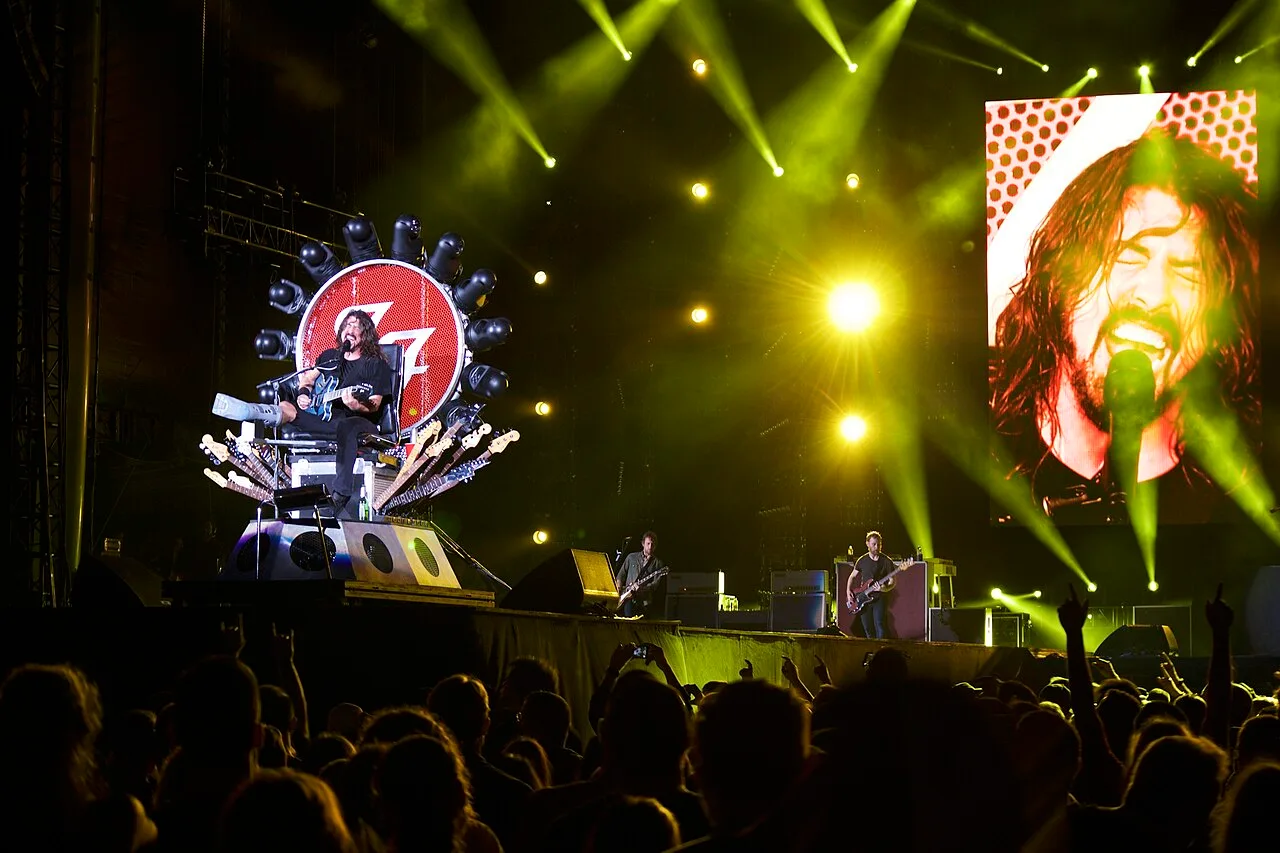
Monitor engineer Ian Beveridge has put the Foo Fighters' in-ear mixes on Sennheiser's Spectera wideband bidirectional wireless system. He did it ahead of an upcoming summer stadium tour, and Sennheiser announced the move on October 28.
Beveridge has been behind the console for Dave Grohl for 37 years. He started with Grohl at 26 and will turn 63 this year. Before that he toured Europe with Nirvana in support of their debut album.
Why Spectera
The band runs three distorted guitars and a hard-hitting drum attack. Making room for all of that inside in-ear monitors is, in the release's words, one of the most grueling assignments in live audio. Beveridge says the only way to hear everything is to pan the guitars apart.
Analogue FM stereo in-ear systems encode left and right channels through multiplexing, and separation can deteriorate when RF conditions get worse. Spectera's digital transmission keeps a clear left-right split and a stable stereo image through the show, according to the release.
“Traveling all over the world, swapping out narrowband systems for different geographical areas — it becomes a royal pain in the neck,” Beveridge says. “When Spectera became available, I pulled the trigger without even hearing it.”
Sennheiser artist relations manager Tim Moore adds that with discrete separation you can place one guitar far left, one far right and one dead center, without a volume fight and with less ear fatigue.
Testing and daily use
The first big test came at a live television broadcast for SNL UK in London. Beveridge says the base station meters showed interference when it was switched on. He then walked with a bodypack through corridors, thick brick walls and out past the production trucks, and the audio stayed solid.
Control runs through a WebUI. Walking one pack around maps the whole venue, and different audio link modes can be given to individual bodypacks. The lead singer gets the lowest latency possible. Management or a tech can sit on a mode where latency matters less.
Frequencies can also be changed in software. Beveridge says the band has had to shift frequencies as the musicians were walking onto the stage, and the bodypacks all jumped to the new TV channel in about 20 seconds without anyone touching them.
The rack shrank as well. Beveridge says the radio rack went from a five-foot cabinet to 2U: two base stations and a laptop.
Not everything is new. His vocal chain stays on the Sennheiser MD 431 dynamic microphone, which he says will remain the band's mic as long as he is monitor engineer.
“I’m at a point now where I don’t even think about the RF,” Beveridge says.
Source: Sennheiser