OpenRB-338 revives ReBirth RB-338 as free open-source software
A free, open-source app now recreates Propellerhead ReBirth RB-338 for current desktop systems. OpenRB-338, by developer pingw33n, aims to reproduce the output of the 1997 original.
What it runs on, and what is missing
OpenRB-338 is distributed for macOS on Apple Silicon and Intel, for Windows on x64 and ARM64, and for Linux on x86_64 and ARM64. The source code is under the GNU General Public License version 3.0. The developer says the project is independent: Propellerhead Software and Reason Studios neither back it nor have any connection to it.
It is a standalone application only. Per the documentation, MIDI input, MIDI synchronization, VST, AU and ReWire support are not implemented. Some original pattern-editing functions and undo are not available yet. For anyone who wanted to wire ReBirth into a modern DAW session, that is the limit to know before downloading.
The accuracy claim
The audio engine was rebuilt from ReBirth 2.01 for bit-accurate rendering. That means the output should match the original sample for sample, not merely sound close. The project documentation describes byte-for-byte comparisons against loops exported from the original software, run on a collection of more than 1,200 songs.
Old songs and old sounds
ReBirth's file format matters because songs written decades ago live in it. The app opens ReBirth 2.x song files in RBS versions 4.0 through 4.2, and ReBirth 1.x songs as well. It can write RBS 4.2 files that the original software opens, so a project can go back to the old program.
Modification files are supported, so alternative drum samples and their mod sounds can be loaded. That kit ships with the app, so it works without the original install media.
The rig itself
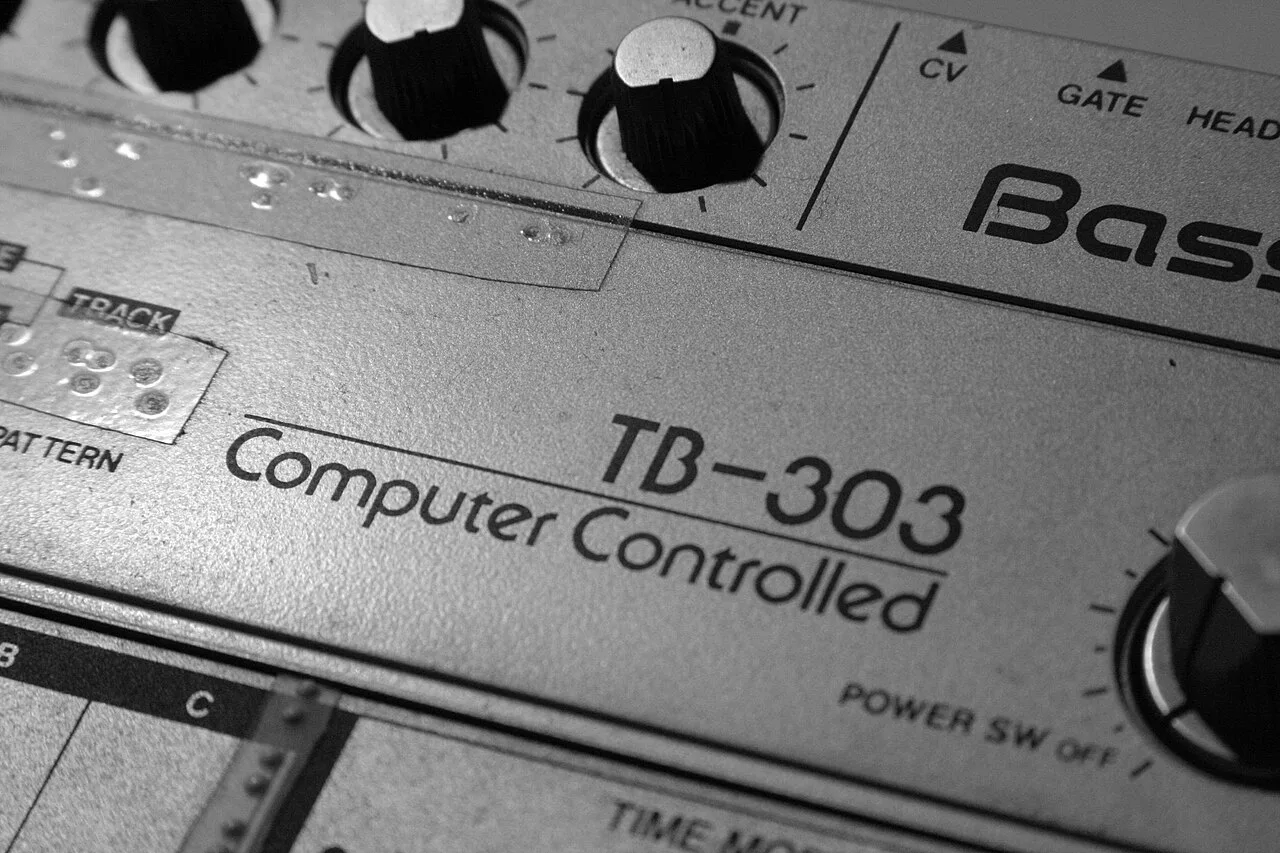
ReBirth combined software versions of classic Roland instruments in one virtual studio. OpenRB-338 keeps that setup: two TB-303-style bass synths, a TR-808 drum machine and a TR-909 drum machine. The mixer, delay, distortion, PCF filter, compressor, pattern and song modes, shuffle, loop and recording functions are all on screen.
The interface is drawn with scalable vector graphics, so the panel stays crisp when the window is resized and on screens of different resolution. Loops export as WAV, FLAC or Ogg Vorbis.
A command-line tool called orb renders songs to audio files and plays them without the graphical interface. It also shows song information, and it can unpack, repackage or re-encrypt modification files.
Source: GitHub