Bluetooth HDT raises the speed limit, but lossless audio must wait
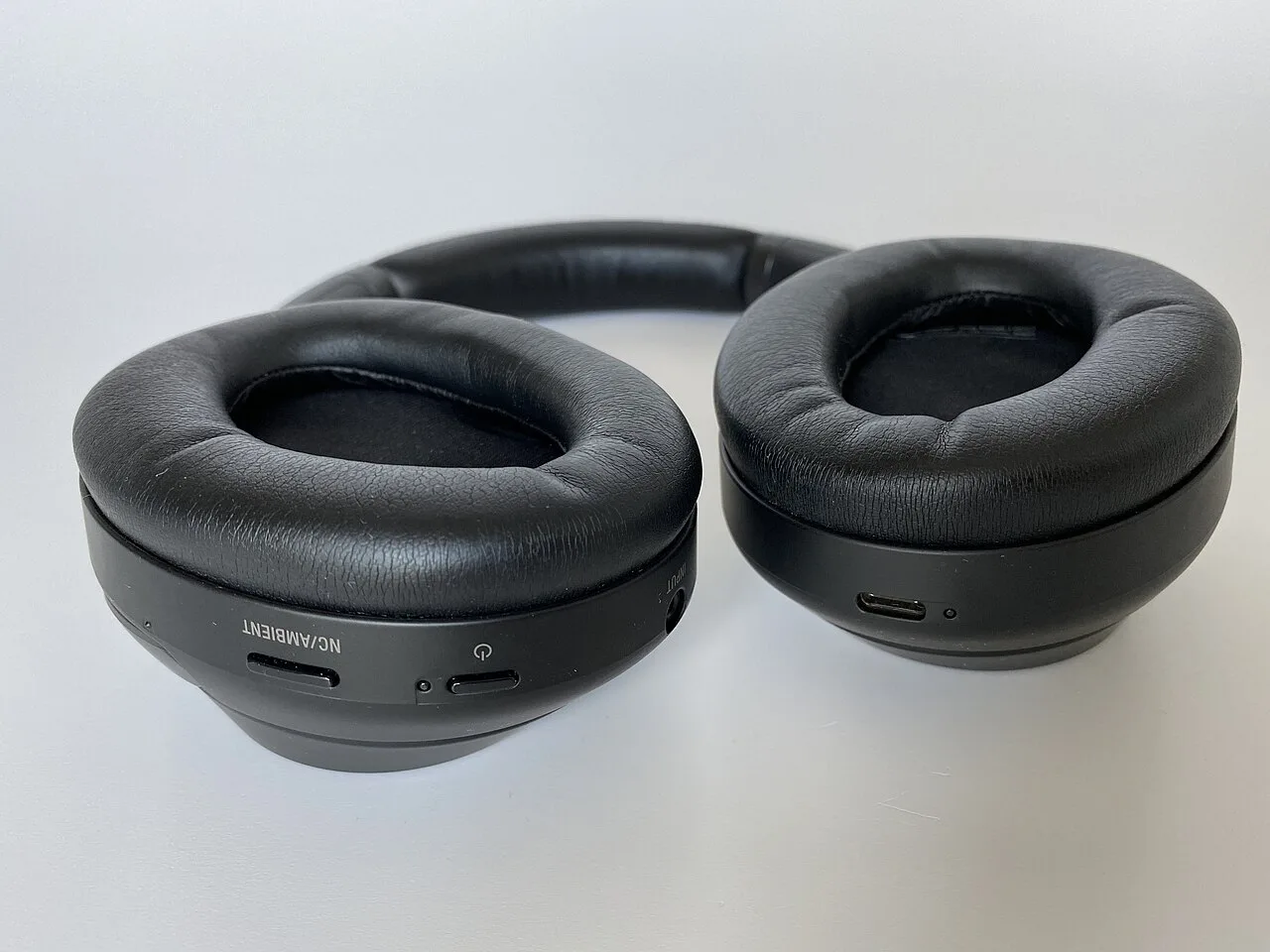
Bluetooth has a new fast lane called High Data Throughput, or HDT. It could give wireless headphones the bandwidth that lossless music needs, but the rest of the system is not ready.
Why today's wireless audio is squeezed
Typical Bluetooth audio streams run from about 200 kbps to just over 1 Mbps, depending on the codec. That is too little for uncompressed CD-quality or hi-res sound, so the phone has to discard some information first.
LDAC and LHDC offer modes of roughly 900 kbps to 1 Mbps. Qualcomm's aptX Lossless reaches up to 1 Mbps and can deliver bit-exact CD quality when radio conditions allow. Even so, true lossless hi-res playback stays hard on conventional connections.
Raw bit rates for common formats show the gap. CD quality at 16-bit and 44.1 kHz needs about 1.4 Mbps. Studio quality at 24-bit and 48 kHz needs about 2.3 Mbps. Hi-res at 24-bit and 96 kHz needs about 4.6 Mbps, which fits natively. Ultra hi-res at 24-bit and 192 kHz needs about 9.2 Mbps, so it would depend on compression.
Hardware and timing
HDT needs a new radio architecture. Existing Low Energy devices cannot gain it through a firmware update. Devices connect first over standard GFSK and then negotiate up to HDT when both ends support it, so older gear keeps working.
The SIG adopted HDT into Bluetooth Core 7.0 on November 4, 2026. It is an optional feature, so manufacturers can skip it. Qualcomm's FastConnect 8800 claims HDT capability, though Qualcomm says its implementation was based on a working draft of the specification. Real product support is still unconfirmed.
The SIG is targeting 2027 for standardized premium wireless audio. Phones, headphone chips, the final codec and the profiles all have to arrive first.
What HDT changes on the radio side
HDT extends Bluetooth Low Energy. Its top physical-layer rate climbs from 2 Mbps to 7.5 Mbps. That is almost four times the old Low Energy ceiling and 2.5 times the 3 Mbps limit of Enhanced Data Rate.
The Bluetooth SIG names extended reality, spatial computing and AI-enabled devices as targets. It also promises standardized high-resolution and lossless audio.
The speed comes from new modulation schemes: π/4-QPSK, 8PSK and 16QAM. They sit alongside the older GFSK method and pack more bits into each radio symbol. Forward error correction adds redundant data so a receiver can repair bit errors without asking for a resend. New packet formats and larger payloads complete the package.
HDT also adapts. It does not always run at 7.5 Mbps and can change its rate as the connection quality changes. That is separate from the audio codec, which decides how much data the music itself needs.
The missing codec
HDT is only the transmission layer. Audio still needs a codec to package and compress the music. The default LC3 codec in LE Audio is lossy by design, built for low power use, so it does not solve the problem.
The Bluetooth SIG is working on a High-Resolution/Lossless Codec project. Its original requirements include 24-bit/96 kHz support and a separate lossless codec that reproduces samples bit for bit. Multi-vendor interoperability testing is planned for March 2027, with the finished standard due later in 2027 if all goes well.
Nobody has confirmed which technology is under test. It might build on Fraunhofer IIS' LC3plus Lossless, or it could be something new. Third-party vendors may also launch proprietary codecs for the extra bandwidth in the meantime.
\nSource: Android Authority