Sony's Warlich on 2.4 GHz, UHF and real 32-bit float
A wireless mic sold as 32-bit float may not record 32-bit float at all. That is the claim from Markus Warlich, Head of Pro Audio at Sony Europe, on the latest Focus Check podcast from CineD.
Warlich says no 32-bit A/D converter exists. A real 32-bit float recorder therefore needs two stacked 24-bit converters. He says at least one manufacturer "upgraded" a 24-bit system through a software update, and he is sceptical of such systems.
He has worked in pro audio at Sony since 1997. The episode replaced the usual weekly news round-up.
2.4 GHz against UHF
Warlich sees two main differences. The 2.4 GHz band is shared with every Wi-Fi and Bluetooth device in the room, and it was designed for data packets that can be requested again, which real-time audio cannot do. UHF gives a frequency of your own once the receiver has scanned for a free one.
The short 2.4 GHz wavelength also fails to pass through bodies, walls or the metal in a monitor. With line of sight the link is fine, but when the wearer turns around it can drop after 10 to 50 m. Advertised ranges of 250 to 500 m are achievable "in the desert", he says. His practical limit is two or three 2.4 GHz systems per room, against up to around 100 UHF channels.
Most 2.4 GHz systems run at around 40 ms of latency, roughly two frames. Sony's DWX started at 3.5 ms and is down to 1.1 ms with Gen 4. For musicians on in-ear monitoring, Warlich cites an AES study that puts the limit for the whole chain at 5 to 6 ms.
A shrinking band
Since 2012 the 800 MHz and then the 700 MHz bands went to LTE and 5G, leaving radio mics with nearly half the space. "The spectrum follows the money," Warlich says. Exhibitors at large shows in Munich can run 38 to 100 channels per booth.
He expects 470 to 694 MHz to remain usable until 2031, shared with other users, and recommends that range to anyone buying UHF now. What follows after 2031, he says, nobody knows. Decisions are made at the ITU's World Radio Conference.
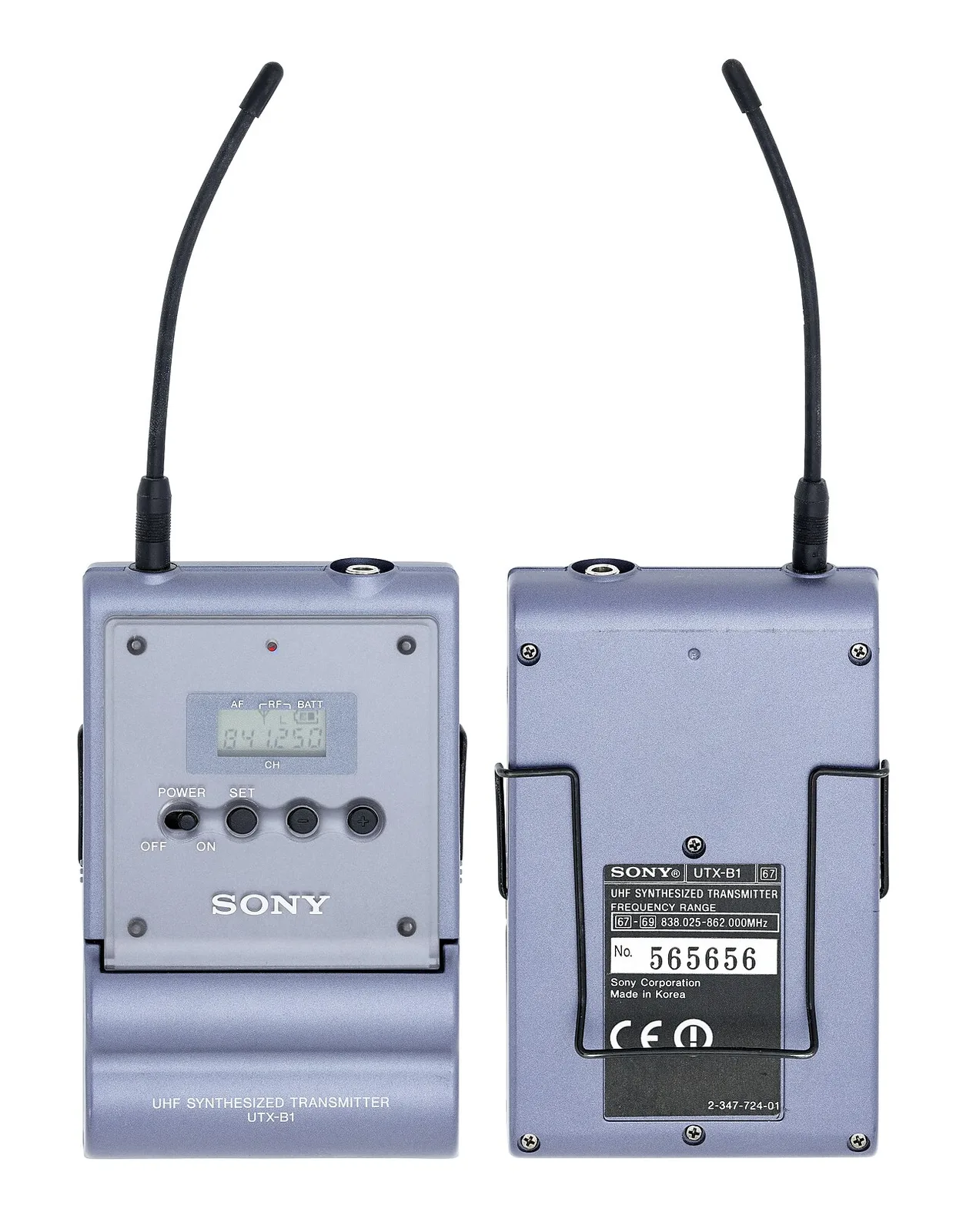
Warlich also says older kits from around 2010 can land in today's 5G frequencies and drop out near mobile masts. He advises checking the sticker on the back.
32-bit float and common mistakes
On Sony's ECM-W5, 32-bit float is generated in the transmitter with two stacked A/D converters. Warlich stresses that he is going by Sony's internal presentation and has not used the W5 himself yet.
32-bit float does not fix a clipping capsule or input stage, clothing rustle or cable noise. Adjusting the level in post and saving also means the file is no longer 32-bit float, so he recommends working on a copy.
The mistakes he sees most often are not knowing how to scan the spectrum, trusting that last week's frequency still works, flat batteries and lav connectors that are plugged in but not screwed down.
Source: CineD