Samsung soundbar nearly keeps pace with a 7.1.4 studio rig
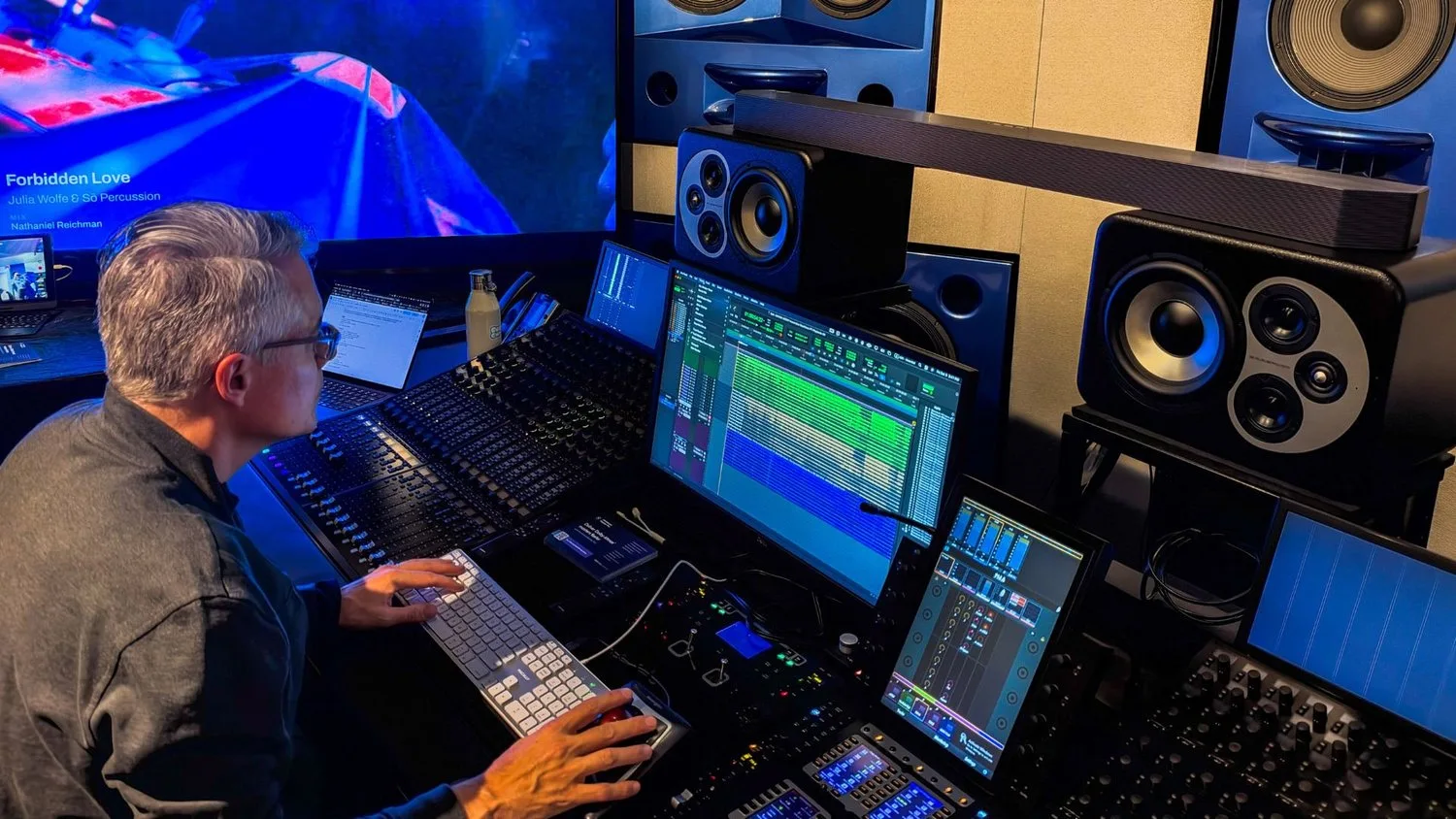
Most people will hear a Dolby Atmos music mix on a soundbar, not in a calibrated studio. Mixer Nathaniel Reichman tested how much of a mix survives that trip, and the result challenges some assumptions about immersive mixing.
Two flagships in one living room
Reichman owns the Sony Bravia Theater Quad, which sells for about $2,300. For an Immersive Machines event in New York he also set up Samsung's flagship HW-Q990H, at about $1,700. Identical Apple TVs fed both systems, and he set the two next to each other. Then he played many albums and films. Some of those albums he had mixed himself.
Both sound good, he says. Dolby Atmos objects move clearly through space and the frequency response feels even. The designs differ. The Samsung is a wide slab under the TV with a subwoofer and two rear surrounds. The Sony drops the centre slab for four square panels that can go anywhere in the room. He found the staging better with the rear pair on the sides.
Where each one wins
The Sony makes a "virtual" centre channel. The Samsung has a real one, and voices had more body and clarity on it. Reichman tried using the speakers of his Bravia television as a real centre for the Sony, and it sounded worse than the virtual one.
The Sony takes the soundfield. Its "360-degree" bubble is almost gapless, and it is hard to find the speakers with eyes closed. It also handles loud film material more gently, and its subwoofer gives bigger bass moments. For stereo records the Samsung sounded boxy and narrow, while the Sony was open.
Both bounce sound off the ceiling for height channels. Reichman calls the effect a bit washy, but unmistakable. Next to studio speakers from Genelec, PMC or Neumann, he finds the drivers flimsy and boxy.
Soundbar against studio monitors
A week later Engine Room Audio hosted an event with AES New York and Immersive Machines, focused on the open-source Eclipsa Audio format. He calibrated and level-matched two systems so attendees could switch between them in the same room. One was a PMC and Augspurger 7.1.4 system calibrated by a Dolby technician. The other was the Samsung soundbar with its subwoofer and surrounds, playing Eclipsa Audio from YouTube. He notes the studio system costs fifty times more.
The studio speakers were better in every way. Still, the Samsung often came close in each subjective category. Several listeners asked which system they were hearing, and one mixer wrote that the soundbar blew their mind.
Tracks with space, deep bass and sound from every direction held up. Front-heavy mixes suffered most, because all their energy gets pushed into the front slab.
Mixes that use the whole field
Reichman takes two lessons from this. First, decisions made in an immersive studio reach the consumer, so subtle choices in a Dolby Atmos or Eclipsa Audio version do matter. Second, soundbars reward mixes that use the whole immersive field.
Reichman does not recommend mixing on a soundbar. He calls these systems remarkable, but they are not professional loudspeakers. He adds that, in his limited experience, a computer running Pro Tools will not get enough channels for Dolby Atmos over HDMI, because Apple has capped Core Audio at eight channels for reasons unknown.
Source: Production Expert