inMusic plans to open MPC and other gear to modders
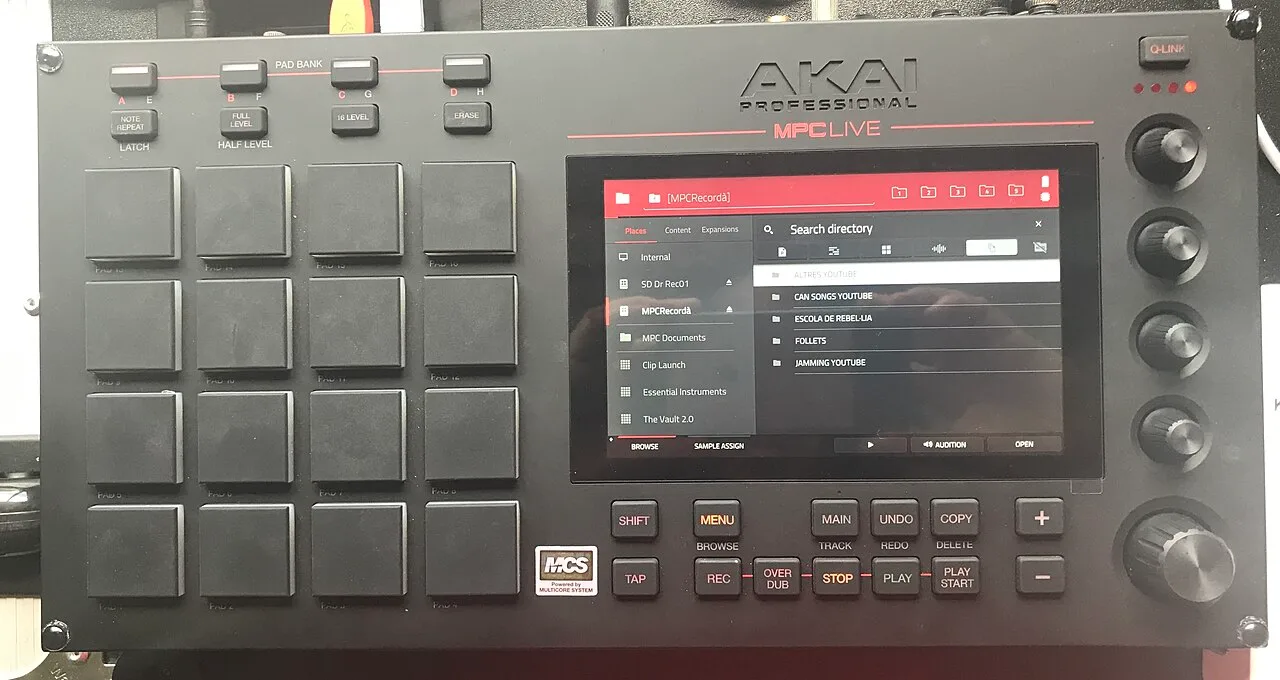
inMusic, the parent of Moog, Akai, Numark, Alesis and Denon, is opening up to modders. It says many of the 22 products it will launch in January will accept custom code, from traditional and AI-assisted developers alike.
What January's NAMM show will hold
inMusic will present 22 "new, fully operational and feature-complete" products at NAMM. Many of them will be open to programmers and modders. The company also plans a hands-on space called The Creator Lab, next to a program run with artists.
Engineers will be on hand at the lab. The gear shown will be pre-production prototypes that are not yet shipping. That differs from how inMusic usually shows hardware in public.
Modding MPCs is an old idea
The desire to mod MPCs is not new. Long before AI coding, JJOS appeared in 2006 as an unofficial firmware for the MPC1000, 2000 and 2500. It added features and fixed some bugs. As the author recalls, it never had Akai's blessing.
What is new is an official route. Last week inMusic said that versions of both MPC Sample and MPC Sample Keys will be open to custom coding, and that it will seed hardware to that coder community. CEO Jack O'Donnell has now described a wider plan that includes other hardware, among them the MPC flagships.
Open, but not necessarily open-source
Open here does not necessarily mean open-source hardware or firmware. The author expects that some devices will follow the model Ableton used for Extensions, where outside code is kept apart from the main system. That is called sandboxing: the experiment lives in its own space and cannot disturb how the gear runs.
Previews showed a standalone MPC being unlocked and reached over ssh, with developer functions switched on. Add-ons can then do anything from visuals to sound. The user can afterwards go back to normal.
Not every developer wants AI in the loop. Their objections include reliance on a few vendors, what the models were trained on, and fears that their own coding craft will fade. Others simply enjoy hand-coding. The author says every discussion with inMusic included traditional developers as well as newcomers and vibe coders.
Finished devices, with a way back
O'Donnell says openness is not a retreat from reliability or from stage-ready gear. "Openness doesn't require incompleteness," he said in a press release. The products are still meant to be finished, not a blank shell.
It seems free, thoroughly tested firmware updates will continue. Owners can experiment with mods, with less fear of ruining costly hardware, and can go back to factory firmware.
Bricking is a real risk with custom firmware. It comes up often in communities around M-VAVE, whose cheap FM-1 helped this trend take off. M-VAVE has since released its own SDK.
The report does not say which products will be involved. Native Instruments and Moog recently joined the inMusic group, and what that means for them is unclear. More detail on the SDKs is promised.
Source: CDM Create Digital Music