Eurovision 2026 in Vienna Used the Largest Spectera Setup to Date
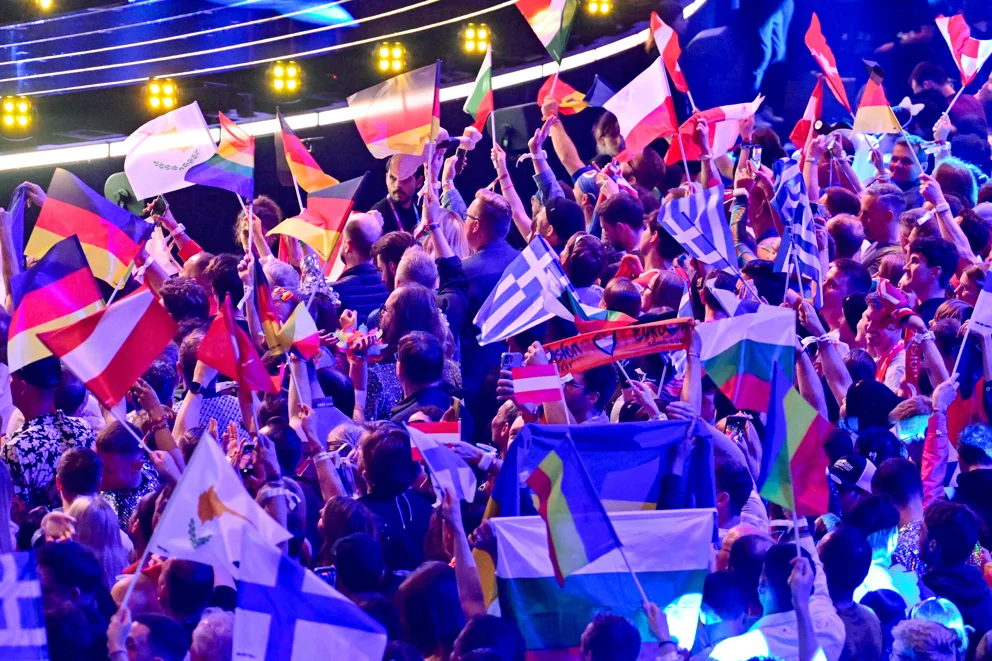
The 70th Eurovision Song Contest took place in May 2026 at the Wiener Stadthalle in Vienna. Sennheiser, official audio supplier to host broadcaster ORF, used its biggest Spectera wideband installation so far, including manufacturing samples of the Spectera handheld before its market launch. Technical production was handled by the Rome-based company Agorà, with Valerio Motta as project lead and Gerhard Jansa as ORF's head of sound.
Equipment list
- four active Spectera Base Stations, each on one RF channel, carrying about 150 streams of microphone, in-ear and control data;
- one Base Station scanning the spectrum around the clock and ready to step in as a spare, plus one more unit kept as a true spare;
- 46 Spectera SKM handhelds with Neumann KK 105 A supercardioid capsules;
- 101 Spectera SEK two-way bodypacks;
- Headmic 4 cardioid headsets;
- IE 100 PRO in-ears and EK 2000 IEM receivers for the orchestra and dancers.
Antenna signals ran from the sound room to front of house over fibre, converted back to copper with standard IT media converters. DAD antennas were also placed behind the stage for artists entering from behind the video wall.
42 seconds between acts
Each song lasts three minutes, and the audio crew had 42 seconds to change over. With at most six performers per act, the team rotated three sets of six: handhelds, SEK packs used only for in-ears, and packs combining a headset microphone with in-ear monitoring. The contest winner, DARA, performed on a Headmic 4.
Sennheiser engineer Volker Schmitt described how the software helped: when a performer said she could not hear herself in rehearsal, the crew saw the cause on screen and solved it through a liaison manager. For a costume covered in metal studs, they watched RF health drop and reacted before the artist noticed. Motta said no artist complained about their in-ear sound.
Back where it started
Sennheiser developers Jan Watermann and Sebastian Georgi linked Spectera's origins to Eurovision 2014 in Copenhagen, held in a metal former shipyard where RF fading was severe. That experience led them to work on an 8 MHz wideband approach with time slots and synchronised clocks. During the 2026 event, the sound crew also collected donations for Vienna's St. Anna Children's Hospital, which Sennheiser matched.