HyperX FlipCast review: dynamic mic with USB-C and XLR outputs
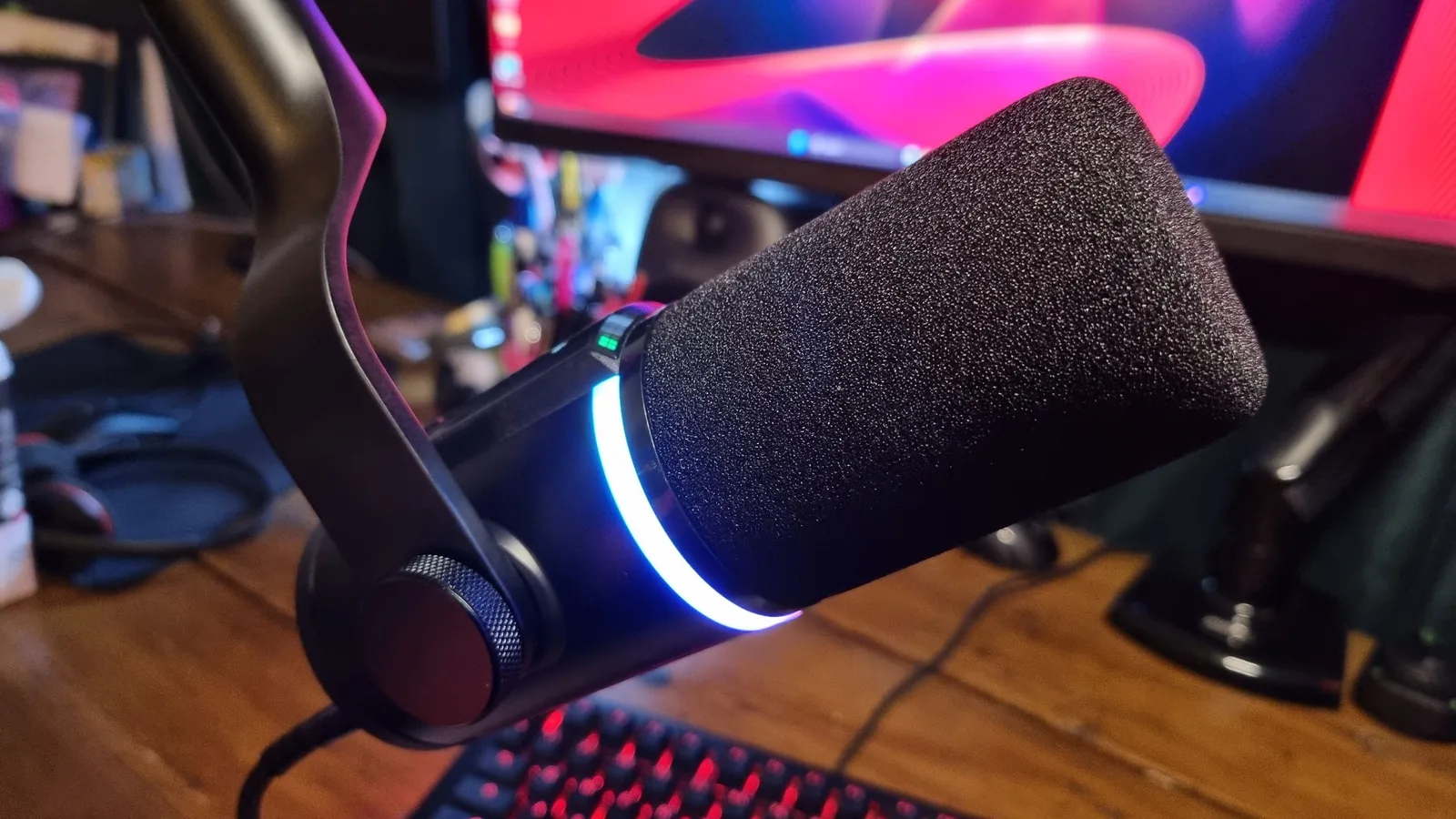
HyperX's FlipCast is a podcast-style dynamic microphone aimed at gamers and streamers that offers both USB-C and XLR outputs on the same body. It costs $261 in the US and £195 in the UK. A hands-on review liked how it captures voice but criticised its software and US pricing.
Two connections at once
The rear panel carries a USB Type-C port (a Type-A adapter is included) and an XLR socket. The XLR output does not need 48V phantom power, and both outputs can be used together, so the mic can feed an audio interface and a PC at the same time. It records at up to 32-bit/192 kHz with a 20 Hz to 20 kHz frequency response and a cardioid pattern.
The mic comes on a curved yoke for boom-arm mounting, with a large foam windscreen, but no desktop stand is included. Controls include a capacitive mute button on top, an LED gain display, a volume dial, a 3.5mm headphone jack for monitoring and an adjustable RGB ring. Two small rear buttons switch on a high-pass filter, which trims low-frequency rumble, and a presence boost, which lifts the upper mids and treble.
What testing showed
With both switches on, the reviewer heard a clear but slightly thin voice suited to cutting through game audio in chat; with them off the tone became fuller. They found the mic very sensitive, picking up background noise and some hiss at 60% gain even from a distance. HyperX's Ngenuity software offers noise cancelling, a compressor and a limiter, but each is only an on/off checkbox with no adjustment. The noise cancelling removed most room noise, yet it also clipped in and out on small sounds such as a jingling zipper. The equalizer has no built-in presets. The reviewer's preferred setup was noise cancelling and limiter on, compressor and filters off.
Over XLR the output was hot enough that the reviewer suggested taming it with VST plugins. Their comparison point was the Shure MV7+, which also offers USB and XLR, costs $300 and also ships without a desktop stand; they said the Shure has better software and a more studio-like sound. They also noted that the UK price is far lower than the US one in relative terms.