Voice-Over Microphones Worth a Look: Ten Models Reviewed (2021)

A good voice alone will not carry a narration if the recording is thin, noisy or distorted. This roundup starts from that idea and gathers ten microphones suited to voice-overs, podcasts, YouTube narration and game commentary. Most of them plug in over USB, a few use XLR and need an adapter for a computer, and nearly all rely on a cardioid-style pattern to keep the voice in focus. Here is how the review saw each of them.
Ten voice-over microphones and the review's verdict
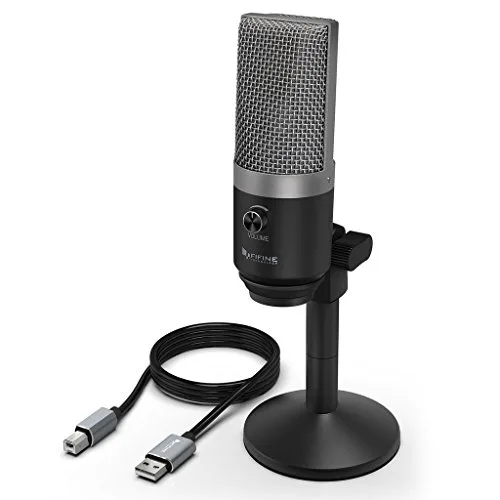
- FIFINE Technology Microphone – listed first. A USB condenser with a large diaphragm, a metal body and a headphone jack for live monitoring. The review liked its sound capture and durability, but reported driver errors and occasional connection trouble.
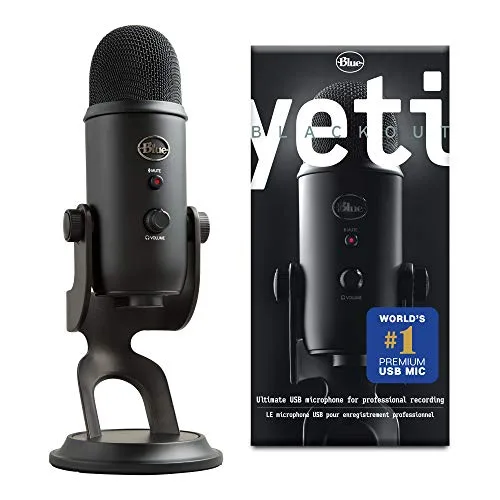
- Blue Yeti USB – a tri-capsule mic with several selectable patterns, including bidirectional, omnidirectional and stereo, and a 20Hz–20kHz response. It works with many Windows versions and with Mac. The review named it the top recommendation overall, though it criticized the customer support and found the build a bit weaker than expected.
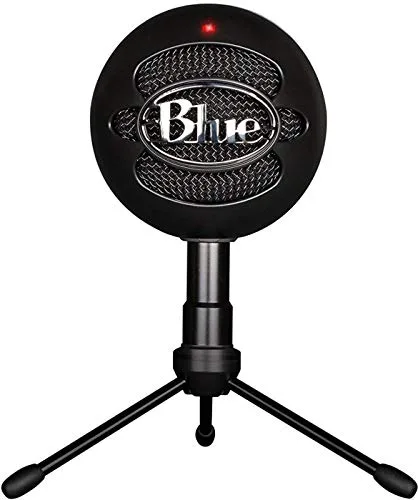
- Blue Snowball iCE – a driverless plug-and-play USB mic with a large condenser capsule and a 40Hz–18kHz range, aimed at YouTubers on a small budget. Some distortion and a modest build were its weak points.
- TONOR USB – a complete kit with stand and shock mount, a cardioid pattern and a 20Hz–20kHz range, backed by a 30-day refund policy. The budget recommendation, although the review found it less durable than hoped and could need duct tape to hold its position.
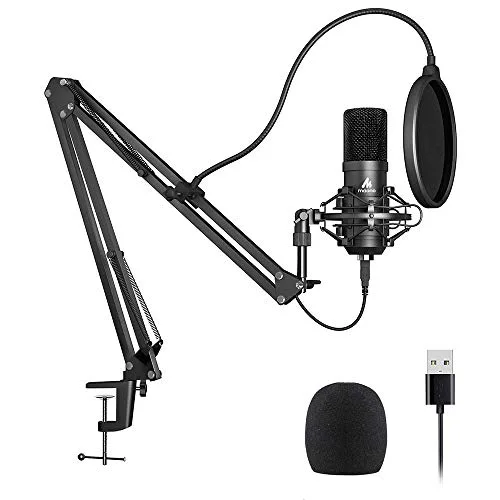
- MAONO USB – a kit with a condenser mic, foam cover and adjustable stand, compatible with Mac and Windows. The only listed con was that it needs drivers.
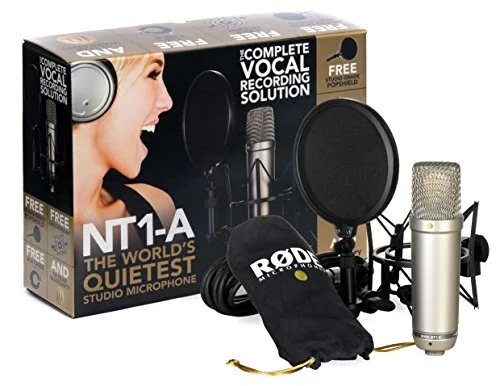
- Rode NT1-A – a light, sleek studio mic with a cardioid pattern, low noise and a full accessory bundle. It was the pick for buyers willing to spend more; price was the single drawback.
- Rode NT-USB – a USB mic with a stand, shock mount and 3.5mm headphone jack for monitoring. Praised for clean, low-noise audio and aimed at professional YouTubers; the review noted problems with the bundled extras and said it is not for beginners.
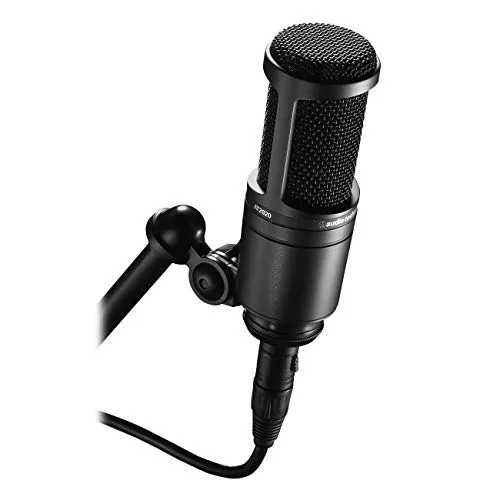
- Audio-Technica AT2020 – an XLR cardioid with a low-mass diaphragm and loud, crisp output. Its one con: connecting it to a laptop requires a 3.5mm adapter.
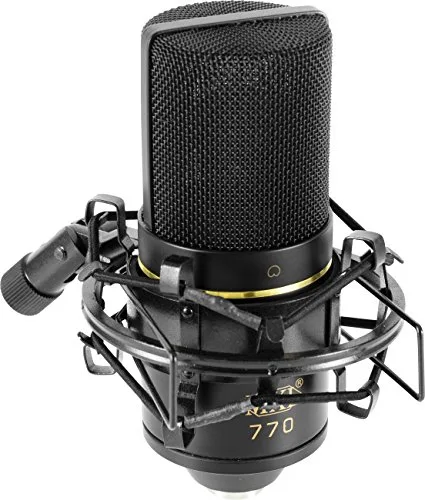
- MXL 770 – an XLR mic with a patented design and a low-frequency roll-off, suggested for beginner YouTubers. It also needs an adapter for a PC.
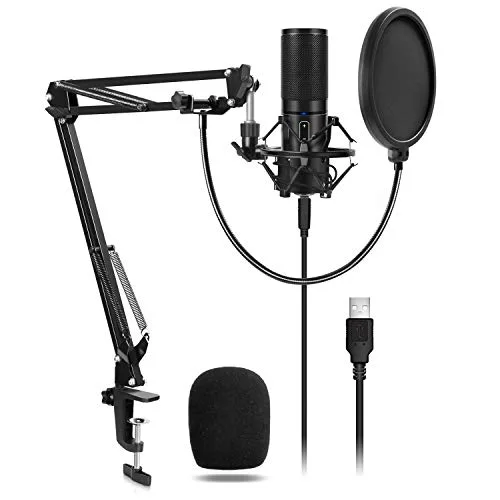
- THRONMAX MDRILL – a compact cardioid with a large capsule array that works with Windows, Mac, PS4 and Xbox One. The review warned it wants a quiet room, as its noise rejection is not very strong.
Picking the right voice-over mic
For undecided readers the roundup offers three shortcuts: the Blue Yeti as the best all-round choice, the Rode NT1-A for a bigger budget and the TONOR kit for a tight one. Beyond that, it asked buyers to think about three things:
- Budget. In the review's view, an inexpensive mic can record decent audio but may show quality problems, so a long-term buyer should be prepared to spend more.
- Pickup pattern. For a single voice, a cardioid or super-cardioid pattern is the sensible choice, and every mic on the list offers one.
- Connection. USB mics plug straight into a computer, while XLR models need a 3.5mm adapter, so buy one alongside an XLR mic to avoid setup headaches.
The bottom line: a dedicated voice-over microphone removes much of the background noise and distortion that make narration sound amateur, and it is worth paying for if you want your videos to impress.